
By the Silver Gold Today Editorial Team. This article is general education only — not licensed financial advice and not a buy or sell recommendation. Silver Gold Today may earn a commission from some links on the site; see our affiliate disclaimer.
Many gold and silver bars ship sealed in a printed plastic card, and many coins arrive with a certificate. Buyers often treat those papers as proof. Assay cards and certificates are better understood as one layer of evidence: useful when the issuer is verifiable, and weak when it is not. This guide shows which primary pages to open, what fields to check, and a verification checklist — without restating prices, premiums or forecasts.
Primary sources and tools to open first
- PCGS — certification lookup tools for graded coins
- NGC — certification lookup tools for graded coins
- The producer’s own packaging and serial-verification pages for the bar brand you hold
Read those tools yourself. Do not invent “guaranteed authenticity” claims from a marketplace listing.
What “assay” means in plain language
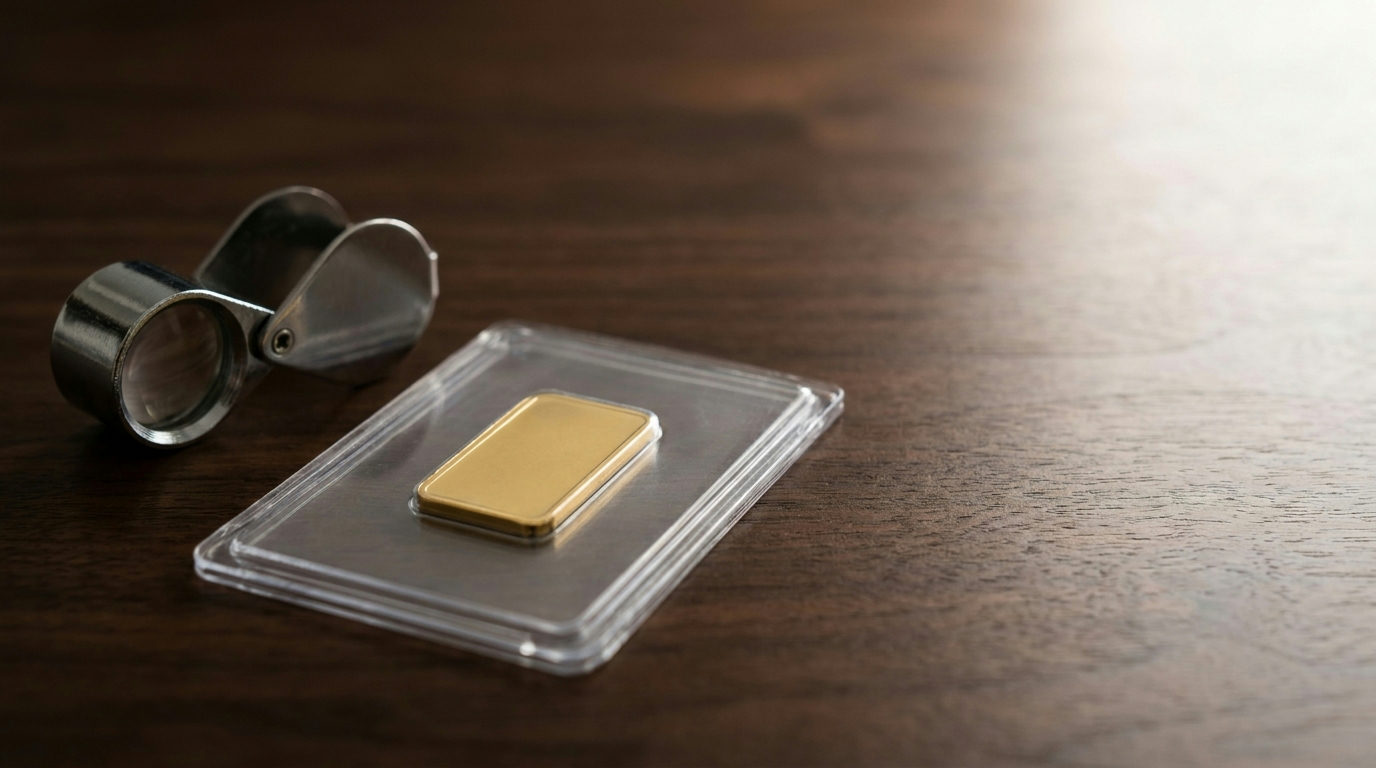
To assay a metal is to test composition and purity. When a bar is described as assayed, the producer is stating that the metal was tested and that they stand behind stated purity and weight. An assay card is the packaging that carries that statement, often in a tamper-evident holder with key details printed on the card.
Fields to read on assay cards and certificates
- Producer name or mark — confirm the refiner or mint exists independently.
- Metal and weight — compare with the bar’s markings and the producer’s published specs.
- Fineness — use only as the producer’s stated purity; verify with testing when stakes are high.
- Serial number — must match the bar; use producer lookup tools if offered.
- Security features — holograms or specialised printing; compare with producer images.
Write each field in a notebook rather than relying on memory at a dealer counter.
What cards establish — and what they do not
If the issuer is verifiable, a card can document which producer made the bar, the weight and fineness they claim, and that the piece likely stayed sealed. Cards do not prove authenticity on their own (packaging can be copied), do not replace physical checks, and do not create a collectible premium the way a rare coin date might. Once a seal is cracked, tamper-evidence is gone.
For physical checks that apply with or without packaging, see fake gold and silver coins.
Common misconceptions
- Any bar with a card is automatically genuine — packaging can be copied.
- An uncarded bar is automatically fake — many genuine bars sell loose.
- A certificate always raises resale value like a rare collectible — the main benefit is easier verification, not a higher metal price.
Verification checklist for assay cards and certificates
- Verify the producer exists and can be looked up independently.
- Compare fonts, layout and security features with the producer’s published images.
- Match serial numbers on bar and card.
- Use producer verification tools or scannable features when offered.
- Inspect the seal for cracks, gaps or glue marks.
- Note packaged weight for later comparison if you keep the seal intact.
- Consider the seller’s testing and return policies — see how to choose a bullion dealer.
Certificates for coins and graded holders
Mint-issued certificates for proof or commemorative coins are useful records — keep them with the coin. Graded coins from services such as PCGS and NGC seal coins with certification numbers; check numbers in those services’ databases and compare the coin and label with the online record. Counterfeit holders exist. Certificates from sellers you cannot verify deserve little weight, especially when used to justify a higher ask.
Keep packaging or discard?
Our educational stance is to keep sealed packaging and original certificates intact when practical. They preserve tamper-evidence, can simplify resale conversations, protect surfaces (see how to care for coins), and retain producer, weight and purity records. If a card is damaged, keep bar and card together as part of the item’s history.
Carded versus uncarded bars
Cast bars and some older or larger bars sell loose with markings in the metal. Those can be genuine; they simply rely more on markings, seller reputation and testing. Carded packaging may add production cost that can appear in a premium — judge that yourself against dealer quotes without treating this page as a price guide. Broader format notes: gold bars vs gold coins.
FAQ: assay cards and certificates
Can a bar be sold without its assay card?
Often yes. A dealer may test first. Metal content does not vanish when packaging is missing.
Does a card add value beyond the metal?
Not like rarity on a collectible coin. It mainly eases verification and resale conversations.
Are certificates of authenticity worth keeping?
Yes as records, especially for proof and commemorative coins.
How do I spot a fake card?
Compare with producer images, check serials and seals, and weigh/measure against published specs — or have a reputable dealer test.
Is this investment advice?
No. This is educational packaging literacy only.
What not to do
- Do not treat a glossy card as a substitute for producer verification.
- Do not invent premiums or “guaranteed” resale numbers from memory.
- Do not ignore seal damage.
- Do not skip database checks on graded holders.
Notebook template for a purchase day
Date — Producer — Serial — Seal condition — Lookup result — Seller — Physical checks performed. One sheet keeps assay cards and certificates decisions honest.
Talking with a dealer
Ask how they test stock, whether they verify serials, and what happens if a seal fails later. Write the answers. Educational shopping is slower — and safer — than rushing a listing photo.
Household storage
Store cards flat, dry and away from direct sun so printing and holograms stay readable. Keep certificates in the same sleeve as the coin when possible.
Inherited collections
Sort pieces into carded, graded, loose and certificate-only piles before any sale conversation. Mixing categories makes offers harder to compare. See also how to sell gold and silver.
Online listing red flags
Blurry card photos, serials that do not match the bar, and sellers who refuse returns deserve extra caution. Open the producer page before you message the seller.
Methodology note
This guide describes common packaging practice. It does not evaluate any specific producer or product and contains no price data or forecasts. Producer security features change — check current published materials.
Teaching a co-buyer the same checklist
If two people share purchasing decisions, print the verification checklist and both initial it. Shared wallets fail when one person trusts a card photo and the other never opens the producer page.
Keep a dedicated envelope for certificates so they do not vanish into a junk drawer before resale day.
When a friend forwards a “too good” listing, reply with the checklist instead of a gut reaction. Educational habits scale better than one lucky purchase story.
When in doubt, pay for a professional test rather than arguing with a blurry photo of a hologram.
Closing tip
Assay cards and certificates help when the issuer is real and the seal is intact; they never replace independent checks.
This week, open the PCGS or NGC lookup for any graded piece you own, and for one carded bar write the seven checklist items above before you buy or sell anything new.