
By the Silver Gold Today Editorial Team. Reviewed through our editorial process. This article is general education. It is not financial advice and not licensed financial advice. Silver Gold Today may earn a commission from some links on the site; see our affiliate disclaimer.
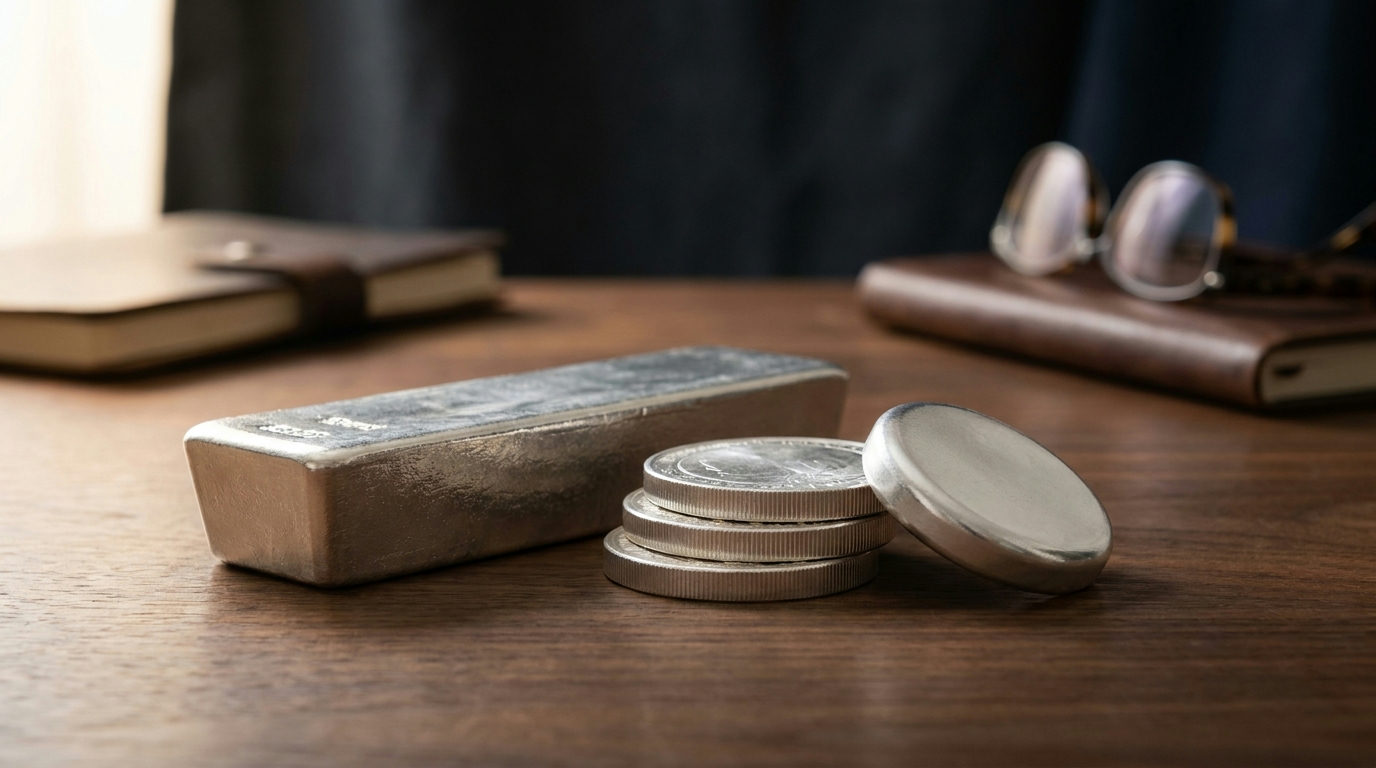
Physical silver is sold mainly as bars, rounds, and government bullion coins. Comparing silver bars vs silver coins is less straightforward than the equivalent comparison for gold, because silver’s lower value per ounce makes fabrication, shipping, and storage costs a larger share of the total. This analysis sets out the structural differences between the formats, the cost factors that matter most for silver, and the checks we apply before choosing.
Key points
- Silver bars generally carry a lower premium per ounce than silver coins of similar weight.
- Government silver coins offer published specifications and broad recognition.
- Rounds sit between the two: private-mint coin shapes without legal-tender status.
- For silver, storage space and shipping weight matter more than for gold.
Definitions
Silver bars
Refiners and some mints produce silver bars in a range of sizes, from small bars to large bars weighing many ounces. Bars are either cast (poured into moulds) or minted (cut and stamped). A bar normally carries its weight, fineness, and the producer’s mark, and some carry serial numbers.
Silver bullion coins
Mints, often government mints, strike silver bullion coins to contain a stated amount of silver. Issuing mints publish specifications; the United States Mint, for example, publishes details for its own silver bullion coins. Many carry a nominal face value, but silver content drives market value.
Silver rounds
Private mints make rounds, which are coin-shaped pieces without legal-tender status or face value. Dealers price them on silver content plus a premium that often falls between that of bars and government coins.
Silver bars vs silver coins: comparison table
| Factor | Silver bars | Silver rounds | Government silver coins |
|---|---|---|---|
| Premium per ounce | Generally lowest, especially in large sizes | Generally moderate | Generally highest |
| Recognition by dealers | High for known refiners | Varies by producer | Generally high |
| Published specifications | From the producer | From the producer | From the issuing mint |
| Divisibility | Lower for large bars | High | High |
| Stacking and storage | Most space-efficient | Tubes; efficient | Tubes; efficient |
Why the comparison differs for silver
Silver is worth far less per ounce than gold. The fixed costs of producing, packaging, shipping, and handling an item therefore make up a larger proportion of its price. Three consequences follow, in our analysis:
- Premiums are proportionally higher. A premium that would be modest on gold can be a meaningful share of the price of silver.
- Format choice matters more. The difference in premium between bars and coins can have a larger effect on total cost.
- Logistics matter more. A given value of silver weighs and occupies much more than the same value of gold, which affects shipping, insurance, and storage.
Silver bars vs silver coins: factor-by-factor analysis
Cost per ounce
Bars are simpler to make, so their premium per ounce is generally lower, and the gap tends to widen with bar size. Government coins carry detailed designs and strict specifications, which raise production cost. We recommend comparing items on cost per troy ounce of silver against a live spot quote from a source such as Kitco, and following the method in our guide to spot price vs premium.
Recognition and resale
Dealers widely recognise government coins. They also widely accept bars from well-known refiners. Bars and rounds from unfamiliar producers may receive lower offers or require testing. We suggest asking for the dealer’s buyback price on any product before buying, since the gap between buying and selling prices is the true round-trip cost.
Divisibility
A large bar sells as one unit. Coins and rounds allow partial sales. Holders who expect to sell in stages may value that flexibility despite the higher premium.
Verification
Coins have published specifications and detailed designs that support checks of weight, diameter, and thickness. Bars rely more on markings, packaging, and serial numbers. Our guides to spotting fake gold and silver coins and assay cards and certificates cover the relevant methods.
Storage and tarnish
Silver is bulky relative to its value, so storage space can become a practical concern for larger holdings. Silver also tarnishes over time. Our guides on how to store gold and silver and how to care for coins cover storage materials and environment.
Profiles that tend to favour each format
The following patterns describe common priorities, not recommendations.
- Bars tend to suit holders prioritising the lowest cost per ounce and storing larger amounts.
- Government coins tend to suit holders prioritising recognition, published specifications, and divisibility.
- Rounds tend to suit holders seeking coin-sized units at a lower premium than government coins, accepting that recognition varies by producer.
- A mix is common, combining bars for cost efficiency with coins for flexibility.
Shipping and insurance considerations
Because silver is heavy relative to its value, delivery costs deserve separate attention. Many dealers offer free shipping above a minimum order value, which can change the comparison between a small order of coins and a larger order of bars. Insurance in transit is typically included by reputable dealers, but the terms vary, and it is worth confirming who bears the risk until delivery. For larger orders, signature requirements and discreet packaging are relevant. Our checklist for buying gold online safely applies equally to silver.
A note on older silver coins
Pre-1965 US circulating coins contain silver and dealers often trade them by face value. They have their own pricing conventions; see our guide to junk silver coins.
Evaluation checklist
- Calculate cost per troy ounce of silver, including shipping, insurance, and payment fees.
- Request the dealer’s buyback price for the same product.
- Confirm the producer is recognised and verifiable.
- Consider the weight and space the holding will require.
- Use an established dealer; see how to choose a bullion dealer.
- Record each purchase: product, date, price, and seller.
Frequently asked questions
Is one format better than the others?
Neither is better in all cases. Bars generally cost less per ounce; coins generally offer more recognition and divisibility; rounds fall between.
Why do silver premiums look high compared with gold?
Fixed production and handling costs form a larger share of the price of silver because silver is worth less per ounce.
Are rounds the same as coins?
Rounds are coin-shaped, but private mints make them and they are not legal tender. Dealers price them on silver content plus a premium.
Does shipping cost matter more for silver?
Yes. A given value of silver weighs much more than the same value of gold, so shipping and insurance can be a larger share of total cost.
Methodology and sources
This comparison describes structural differences between formats. It contains no price data, because premiums vary by product, dealer, and market conditions. Product specifications should be confirmed with the issuing mint or refiner, such as the United States Mint. Spot price references point to live sources like Kitco, which may be delayed.
The bottom line
Comparing silver bars vs silver coins comes down to cost per ounce against recognition and divisibility, with storage and shipping weighing more heavily than they do for gold. We recommend comparing total cost per ounce, checking buyback prices, confirming producer recognition, and planning storage before buying. This is not financial advice.