
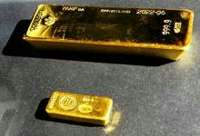
Gold vs silver inflation hedge, on this page, means two quotes you can open and a note you can date. It does not mean a winner, a past price, or a promise that either metal keeps up with shop prices. The photograph is Gold ingot and bar of Banque de France by Ibex73, CC BY 4.0, via Wikimedia Commons. This is not financial advice.

Gold vs silver inflation hedge is a phrase people use when they want one metal to protect spending power. This article does not test that hope. It tells you which page to open and what to write down. The price page to open is LBMA precious metal prices. If this article and that page disagree, the page controls.
Gold vs silver inflation hedge on one card
Write the date you opened the LBMA page. Copy the gold quote the page shows that day, in the unit the page uses. Do not convert it unless the page itself shows the conversion.
On the next line, copy the silver quote from the same page and the same day. Two days are two cards. Do not pair Monday gold with Thursday silver.
Write the unit and the name of the benchmark the page labels. If you do not understand a label, copy it anyway and mark it unread. Do not replace it with a friendlier word.
This card is not a ratio article. A different scheduled piece reads a ratio. Do not divide the two numbers here and call the result a hedge.
What this page will not say
It will not say gold beat inflation in a named decade. It will not print an old ounce price. It will not say silver demand is mostly industrial. Those sentences need a source you opened, and this checklist does not borrow them.
It will not say one metal is steadier. A calmer chart in a story is still a story. Your card has two quotes and a date.
It will not say you should buy, sell, or hold. A quote is not an instruction. This is not financial advice.
It will not mention a fee, a spread, or a storage cost unless you copy that figure from a document you hold. A blog number is not your invoice.
The shop price and the metal quote
A grocery receipt and a metal quote are different documents. If you want to talk about inflation, write which price index page you opened and the date. If you did not open one, write that you did not. Do not invent a rise.
Do not say the metal “should” have moved with the receipt. The card only shows that both numbers exist on the dates you wrote.
If a news story says metals hedge inflation, leave the story in the story. Your note can say you read it. It should not repeat the claim as a fact.
Coins, bars, and a screen
A coin in a drawer is not the LBMA line. Write what you can read on the piece, and keep that line separate from the screen quote.
A fund or a platform that tracks a metal is a third line. Copy the product name from the page you use. Do not assume it matches the bar in the photo or the coin in the drawer.
The photo shows gold bars from a public file. It is not a picture of silver, and it is not a product for sale. Do not treat the image as a catalog.
A second day
Open the same LBMA page again on a later date. Start a new card. Do not edit the first card to look wiser.
If the page is down, write down. Do not fill the blank from a different site and still label it LBMA.
If you compare the two cards, you are comparing two dates you chose. You are not proving a hedge. Say that on the card so you remember.
A sequence
Open the LBMA precious metal prices page.
Copy the gold quote, the silver quote, the unit, and the date.
Leave the ratio piece alone. Do not divide the numbers on this card.
If you mention shop prices, name the page you opened or write that you did not.
Stop before any buy or sell sentence. This is not financial advice.
Questions readers ask
Which metal hedges inflation?
This page does not answer. Gold vs silver inflation hedge here means the two quotes on one dated card. A verdict would be a different article, and it would need sources this page refuses to invent.
Is this the ratio article?
No. The ratio piece is already scheduled. Do not merge the notes.
Is this financial advice?
No. This is not financial advice. A price page is a price page. A person who can see your accounts is the one who talks about what you should hold.
Where the page stops
It stops at the quote and the date. It does not forecast a year, a crisis, or a currency.
Gold vs silver inflation hedge stays a reading job. The LBMA page is the quote. Your card is the record. The photograph is a licensed picture of gold bars, not a recommendation.
Next month, if the card has no date, it is not a record. Open the page again. Screens change. The article does not.
Who else is in the room
If two people share an account, both should see the same card. A spoken price from memory is how the date gets lost.
If an adviser gives you a written note, keep that note with the card and do not rewrite it into this article’s words.
If a comment tells you which metal won, leave the comment. Your card still has two numbers and a date, or it has a blank you refused to fill.
A dealer page is not the LBMA line
If you look at a shop or a dealer, write their name on a separate line. Their number can include a premium the benchmark does not. Do not paste their number onto the LBMA line and pretend it is the same quote.
If the dealer shows both metals, copy both, with the dealer name. Still keep the LBMA card as its own card. Two sources are two sources.
A phone quote is easy to mishear. Ask them to repeat the unit. Write the unit. If you did not hear it, write that you did not.
Storage and a photograph
If you already hold a bar or a coin, photograph the stamp you can read. Put the photo with the card. The photo is an inventory. It is not a price.
Do not weigh the piece and call the weight a value. Weight is weight. Value is the quote you copied, and only for the unit the page named.
If the piece lives in a vault or a box you cannot open today, write where it is and that you did not see it. Do not describe a piece from memory as if you checked it.
What a headline is allowed to do
A headline can send you to the LBMA page. It cannot fill the card. If the headline names a winner between gold and silver, do not copy the winner onto the card.
If the headline names a year of high prices, do not copy the year as proof. Open the price page for today. History, if you want it, is a different reading job with its own source.
Save the headline link only so you can find it again. A saved link is not a citation for a number you did not read.
After a month of cards
A stack of dated cards is a log. It is not a study. Do not average them and call the average an inflation result.
If you want a longer note, write how many cards you have and the first and last dates. Stop there. Do not add a conclusion about purchasing power.
If a card is missing a metal, do not borrow the missing line from the card beside it. Leave the hole. A hole is more honest than a mixed day.