
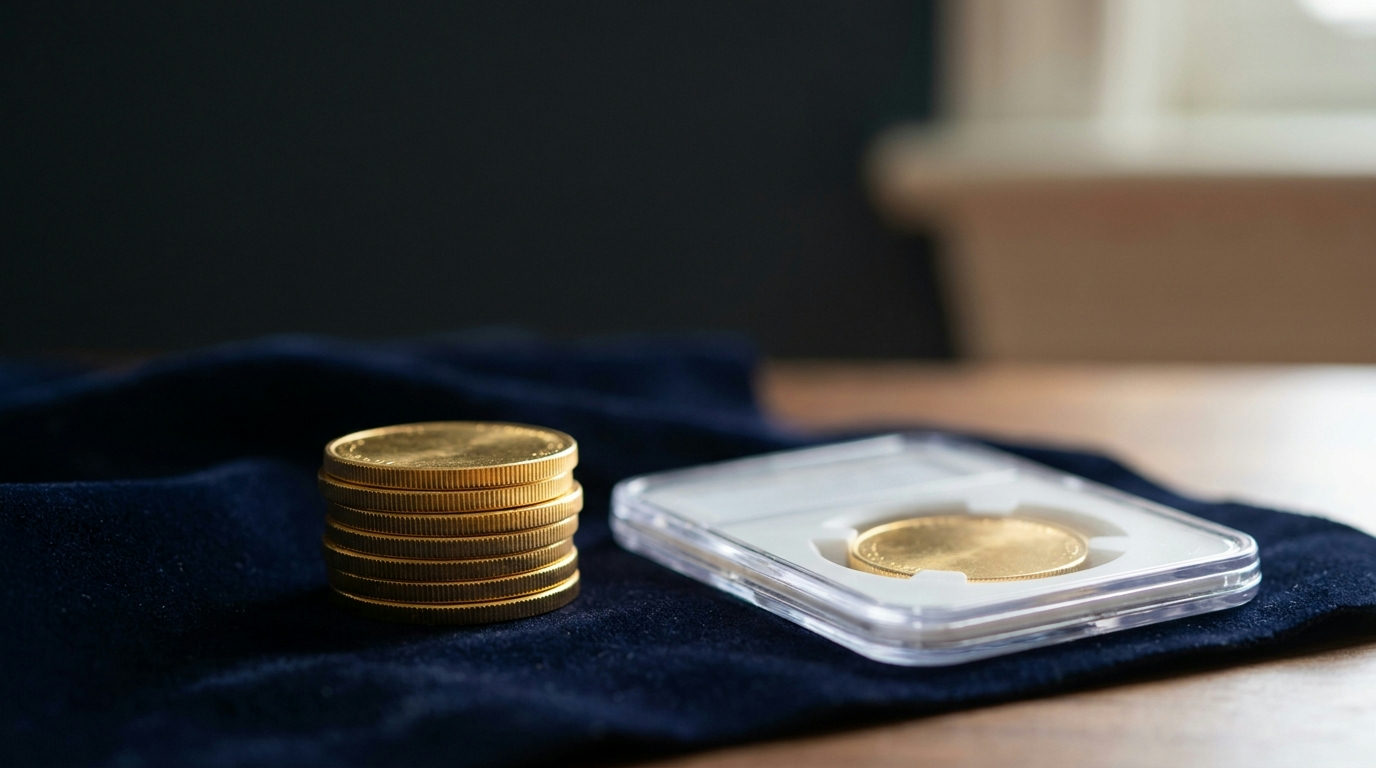
Two gold coins can weigh exactly the same and still sell for very different prices. The reason is usually the difference between bullion vs numismatic coins. One is valued mainly for the metal inside it. The other is valued as a collectible, where rarity, condition, and history can matter more than weight. Knowing which one you are looking at is one of the most important things a new buyer can learn.
This article is general education, not financial advice. Silver Gold Today may earn a commission from some links on the site; see our affiliate disclaimer.
What bullion coins are
Bullion coins are made to hold a specific weight of refined metal. Mints produce them in large numbers, year after year, and their price follows the metal market closely. Government mints, including the United States Mint, issue bullion coins with a stated fine weight and purity. Private mints also make bullion rounds and bars, which are not legal tender but follow the same idea.
When you buy a bullion coin, you pay the metal value plus a premium for making and distributing it. When you sell, a dealer typically pays close to the metal value. The coin’s story is simple: it is a convenient, recognizable way to hold a known amount of gold or silver.
What numismatic coins are
Collectors drive the value of numismatic coins. Their price depends on things like how many were made, how many survive, their condition, design varieties, errors, and historical interest. Metal content still sets a floor under the price, but a rare coin can sell for many times its melt value.
Independent grading services such as PCGS and NGC usually judge condition. They examine a coin, assign a grade on a numbered scale, and seal it in a tamper-evident holder, often called a slab. Two coins of the same date can differ greatly in value because of a small difference in grade.
Bullion vs numismatic coins: the key differences
Comparing bullion vs numismatic coins side by side makes the trade-offs clearer:
- What drives the price. Bullion follows the metal market. Numismatic prices follow collector demand, which can move independently of metal prices.
- Premium over metal value. Bullion premiums are usually modest. Numismatic premiums can be very large, and they are harder to check.
- Price transparency. You can check bullion pricing against a live spot quote in seconds. Collectible pricing depends on grade, auction records, and dealer opinion.
- Ease of selling. Bullion trades widely and most dealers will quote a buyback price. Rare coins may sell best through specialist dealers or auctions, which takes time and carries fees.
- Knowledge required. Bullion needs basic knowledge. Collectibles reward deep expertise, and buyers without it are at a disadvantage.
Semi-numismatic coins: the middle ground
Some coins sit between the two groups. Older circulated coins, proof versions of modern bullion coins, and limited-mintage releases often carry a premium above standard bullion without being true rarities. Sellers sometimes pitch these as the best of both worlds. Treat that claim carefully. The extra premium only pays off if collector demand for that specific product holds up when you want to sell.
One practical test helps here. Look up what dealers are paying, not just charging, for the same semi-numismatic coin. If the buyback offer sits close to plain bullion value, the market is telling you that most of the extra premium may not come back to you when you sell.
Common sales tactics to watch for with collectible coins
Numismatic coins are where many buyers run into trouble, mainly because the pricing is hard to check. Regulators such as the Federal Trade Commission have long warned consumers about high-pressure sales of coins and precious metals. Warning signs include:
- A salesperson steering you away from bullion toward “special” or “limited” coins without explaining the much higher markup.
- Claims that collectible coins cannot be confiscated or escape reporting rules, used to justify higher prices.
- Pressure to decide quickly, or offers that expire within hours.
- Grades from unknown grading companies rather than established services.
- No clear, written buyback price.
A reputable dealer will tell you how much of the price is metal value and how much is collector premium. If they will not, that is useful information too.
Storing and insuring each type
Storage needs differ as well. Bullion coins mostly need protection from theft and basic handling damage, and a simple capsule or tube is usually enough. Numismatic coins need more care, because fingerprints, scratches, or moisture can lower a grade and cut the value sharply. Keep graded coins in their slabs and avoid handling raw collectible coins with bare hands. For insurance, collectibles may need a separate appraisal or a specific policy rider, because a standard policy may only cover metal value. Ask your insurer how it values coins before you assume you are covered.
Which fits your goals?
This depends on why you are buying. If your aim is simply to hold physical gold or silver, bullion keeps costs low and pricing easy to check. If you enjoy coins as a hobby and are willing to study grading, history, and market records, numismatics can be rewarding on its own terms. Many collectors buy rare coins because they love them, not because they expect a profit.
Problems usually start when someone buys collectibles believing they are buying bullion, or pays a collector premium for a coin they do not understand. Be clear about which market you are in before you spend money.
For more background on getting started, see our beginner’s guide to gold and silver investment.
Questions to ask before buying any coin
- What is the fine metal weight, and what is it worth at today’s spot price?
- How much of the asking price is above that metal value?
- If it is graded, which service graded it, and can I verify the certification number on that service’s website?
- What would you pay me to buy this same coin back today?
- Where else is this coin sold, and at what price?
Frequently asked questions about bullion and numismatic coins
Are proof coins bullion or numismatic?
Mints strike proof coins with special care for collectors, and they usually carry a higher premium than standard bullion versions. Most buyers and dealers treat them as collectible or semi-numismatic rather than pure bullion.
Can a bullion coin become numismatic?
Occasionally. A low-mintage year or a coin graded in exceptional condition can attract collector interest. Most bullion coins, though, remain valued mainly for their metal.
Is one type safer than the other?
Neither is risk-free. Bullion carries metal price risk. Numismatic coins carry metal price risk plus the risk that collector demand or grading opinions change.
Do I need a grading service for bullion?
Generally not. Standard bullion coins trade on weight and purity, and most dealers buy them ungraded. Grading mainly matters when collector value is involved.
The bottom line
The choice of bullion vs numismatic coins comes down to what you are paying for. Bullion prices metal; numismatic coins price rarity and condition on top of metal. Both have a place, but they are different markets with different costs and different skills. Know which one you are buying, verify grades independently, and get a buyback quote in writing. If you are unsure how either fits your finances, talk with a qualified financial professional first.