
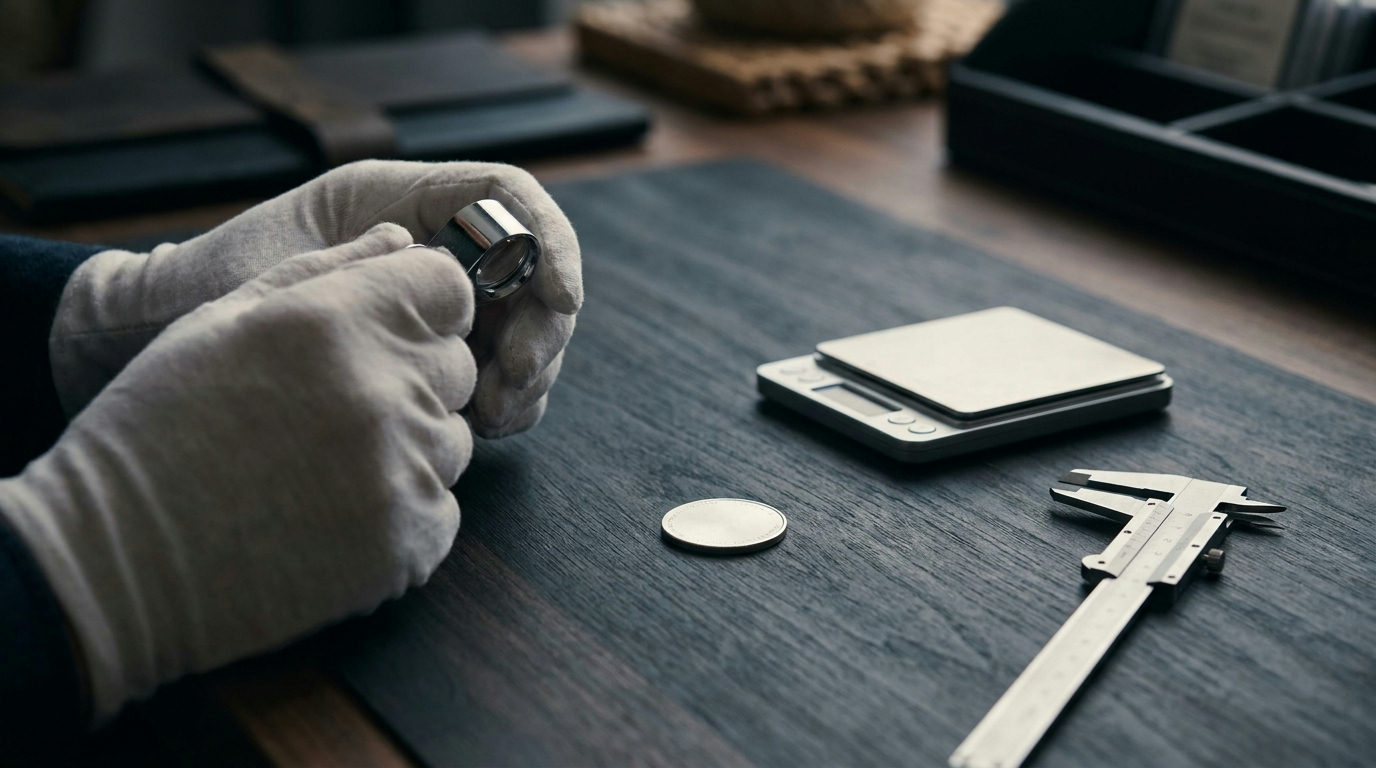
Counterfeit bullion is a real risk, and it has become harder to catch by eye. Some fakes are crude, but others copy the design, size, and even the weight of genuine products closely. Learning to check for fake gold and silver coins protects your money and gives you confidence when buying from anyone other than a long-established dealer. This guide walks through the checks that matter most, from simple at-home tests to professional verification.
This article is general education, not financial advice. Silver Gold Today may earn a commission from some links on the site; see our affiliate disclaimer.
Why counterfeits are a growing concern
Higher metal values make counterfeiting more tempting. Modern fakes often use a base metal core plated with a thin layer of real gold or silver, so the surface looks right and may even pass a quick acid test. The more sophisticated ones use tungsten for gold fakes, because tungsten has a density very close to gold’s, which lets a forger match the weight of a genuine coin.
Online marketplaces and private sales carry the highest risk. Buying from an established dealer with a clear return and authenticity policy lowers it, but even good dealers check what they buy. You should learn to do the same.
Start with the source
The best protection happens before you hold the coin. A price far below what established dealers charge is the most common warning sign. Genuine bullion trades close to spot because everyone can see the spot price. Nobody has a good reason to sell real gold much cheaper than the market.
Other warning signs include sellers with no track record, payment requests by wire transfer or gift card only, reluctance to share clear photos, and listings that use stock images rather than pictures of the actual item. For background on how pricing works, see our guide to spot price vs premium.
Know the official specifications
Every genuine bullion coin has published specifications: weight, diameter, thickness, and purity. Mints list these on their websites. The United States Mint, for example, publishes details for each of its coins. Before you check a coin, look up its official specifications and write them down.
Then measure. A good digital scale that reads to at least a tenth of a gram, and a set of digital calipers, are the two most useful tools a buyer can own. A coin that is underweight, oversized, or too thick should be treated as suspect until proven otherwise.
Simple checks for fake gold and silver coins
None of these tests is perfect on its own. Used together, they catch most fakes. Think of them as layers.
Visual inspection
Compare the coin with high-resolution images from the mint or a grading service. Look at fine details: lettering edges, the depth of the design, the reeding (ridges) on the edge, and the date font. Fakes often show soft details, uneven lettering, wrong fonts, or a slightly different texture. Mismatched dates and designs, such as a design used in a year it was never issued, are a giveaway.
Weight and dimensions
Weigh the coin and measure its diameter and thickness. Because gold and silver are dense, a fake made from a lighter metal will either weigh too little or need to be thicker or wider to reach the correct weight. This one check catches many fakes.
The magnet test
Gold and silver are not magnetic. If a coin sticks to a strong magnet, it is not genuine. Passing this test proves little, though, because many base metals, including tungsten and copper, are also non-magnetic. With silver, a strong magnet slid down a tilted coin should move slowly, because silver resists the magnetic field in a noticeable way. That slide test is a useful hint, not proof.
The ping test
Genuine silver and gold coins ring with a clear, sustained tone when gently tapped or balanced on a fingertip and tapped with another coin. Many fakes produce a dull, short sound. Smartphone apps can compare the tone against known recordings. This test takes practice and works best on silver.
Professional verification methods
For larger purchases, or when the simple tests disagree, professional tools give much better answers.
- Electronic precious metal verifiers. These devices measure how a coin conducts electricity, which differs between real metals and fakes. They can see beneath plating without damaging the coin.
- X-ray fluorescence (XRF). XRF analyzers read the surface composition of a coin. Many dealers use them. They are excellent for detecting the wrong alloy but only read the surface, so a thick plating can still fool them.
- Specific gravity testing. Weighing a coin in air and then in water gives its density. Pure gold and pure silver each have a known density, so a mismatch reveals a fake. Tungsten fakes come close for gold, which is why this test pairs well with an electronic verifier.
- Ultrasound. Some specialists use ultrasonic testing to detect a core of a different metal inside a bar or coin.
Avoid acid tests and drilling on coins you plan to keep. They can damage the coin and reduce its value, and acid only tests the surface anyway.
Graded coins and fake slabs
Coins sealed by major grading services such as PCGS and NGC carry a certification number. Both services offer free online lookup tools. Enter the number and compare the coin, grade, and photos with what you are holding. Counterfeiters have produced fake slabs, so a holder alone is not proof. A certification number that does not match, or a holder with poor printing or loose fit, is a red flag.
What to do if you suspect a fake
- Stop. Do not complete any further purchases from the same seller.
- Take a reputable local dealer the coin and ask them to test it with professional equipment.
- Keep every record: listing screenshots, messages, receipts, and payment details.
- Contact the platform or payment provider quickly; many have time limits for disputes.
- Report the seller to the marketplace and, where relevant, to consumer protection authorities.
Collector organizations such as the American Numismatic Association also publish educational material on counterfeit awareness and can be a useful starting point for learning more.
Frequently asked questions
Can a fake pass the weight test?
Yes. Tungsten-core gold fakes can match weight closely. That is why you should combine weight with dimensions and, for valuable items, an electronic verifier.
Are bars easier to fake than coins?
Bars have simpler designs, which can make visual checks harder. Many refiners now add security features such as serial numbers and tamper-evident packaging. Keep the packaging intact if you may resell.
Is buying from a big dealer completely safe?
It is much safer, because established dealers test inventory and stand behind what they sell. No source is perfect, so it is still worth doing basic checks on arrival.
Should I test every coin I own?
For coins from established dealers, a weight and dimension check on arrival is usually enough. Save professional testing for private purchases, unusually cheap deals, and higher-value pieces.
The bottom line
Most fake gold and silver coins fail at least one simple check: price, weight, dimensions, magnetism, or sound. Layer those checks, buy from sources with a track record, and use professional testing for anything valuable or uncertain. A few minutes of checking costs far less than a counterfeit. If you are new to precious metals, our beginner’s guide is a good place to build the basics.