
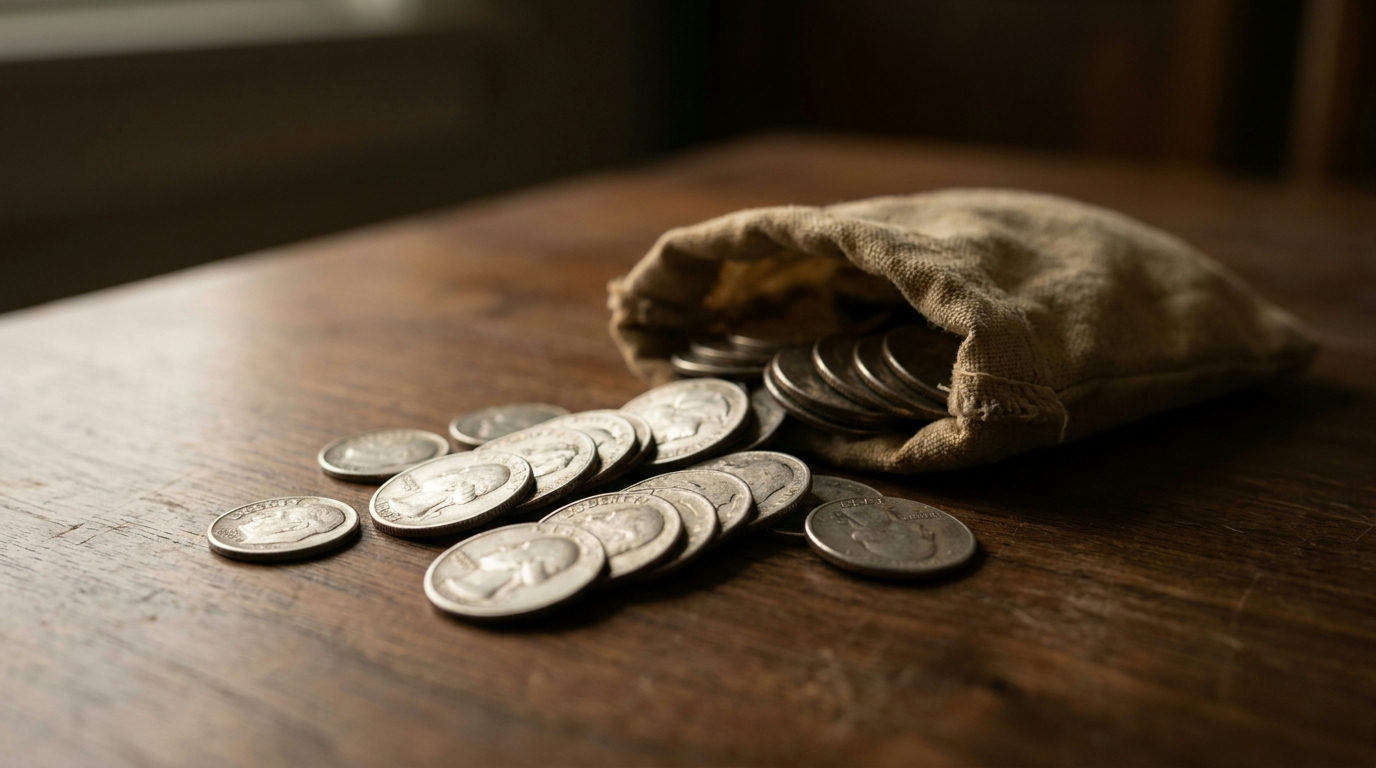
Junk silver coins are circulated US coins that trade mainly on silver content rather than collector premium. This article is general education only — not licensed financial advice, not a price forecast, and not a recommendation to buy or sell. Silver Gold Today may earn a commission from some links; see our affiliate disclaimer.
Before you price a lot, open the primary pages below and write the published dates, composition notes and conversion rules in your notebook. Do not restate percentages, gram weights or ounce figures from memory.
Open these pages first
- GovTrack — Coinage Act of 1965 (S. 2080)
- PCGS CoinFacts — US coin specifications
- NIST — precious metals conversion information
- Kitco — precious metals prices (spot reference; may be delayed)
Educational use only. Spot quotes change; dealer premiums change. This page does not predict silver prices or tell you to buy.
What “junk” means for junk silver coins
“Junk” refers to collector value, not metal value. These coins are often too common or worn for collector premiums, so dealers price them on metal content plus a premium. Open PCGS CoinFacts for the series you hold and confirm date and composition before you treat any coin as junk.
Which coins usually fall in the category
Open the Coinage Act record and PCGS pages and write which circulating denominations and date ranges they describe for silver content changes. In practice, caretakers sort:
- Older US dimes, quarters and half dollars that references list as the classic “junk” pool.
- Later reduced-silver half dollars, which dealers often quote separately — confirm on the specs page before mixing lots.
- Silver dollars, which can carry collector premiums and are often a separate market.
Confirm every series against a reference before relying on a bulk bag label.
How dealers quote junk silver coins
Many dealers quote by face-value lots (for example, a bag described by total face dollars). Open your dealer sheet and write how they define a lot. Because older denominations were designed in proportion to face value, face-value shorthand is common — but you should still verify composition coin by coin.
How to estimate silver content without inventing numbers
Do the maths on paper from published specs:
- Open PCGS (or another primary coin-facts page) for the exact type and write the published weight and fineness.
- Open NIST for the troy-ounce conversion factor they publish — write it down; do not memorise it from a blog.
- Multiply, convert, then adjust mentally for wear: circulated coins have lost some metal. Ask each dealer how they allow for wear.
- Compare a dealer ask to a melt estimate from a live spot page such as Kitco — note the quote time. Our spot vs premium guide explains how to talk about the difference as a percentage without treating it as a forecast.
If you cannot show the calculation from a primary page, do not invent a melt figure.
Comparing denominations inside a lot
Choice between dimes, quarters and halves is mostly practical: smaller coins divide more finely; larger coins are faster to count. Premiums can differ by denomination and stock. Ask for a quote per type rather than assuming they match. Mixed lots still need every coin confirmed as the composition you think you are buying.
Evaluation checklist for junk silver coins
- Open Coinage Act + PCGS pages; jot date cutovers for the series you hold.
- Sort by date, then check edges for clad layering on later coins.
- Separate reduced-silver halves from classic lots.
- Calculate melt from published specs + NIST + a timed spot quote.
- Ask the dealer’s buyback on the same lot the same day.
- Pull nicer coins for a collector check before treating them as junk.
- Keep purchase records for any future tax discussion with a professional.
Identifying silver coins in a mixed drawer
First sort by date. Then examine the edge: older silver issues typically show a solid silver-coloured edge, while later clad coins show a copper layer. Better-condition pieces deserve a collector check before they go in a junk bag.
Storage and sale (educational)
Coin tubes by denomination keep lots organised. A dry, secure place suits many holdings; see how to store gold and silver. Weight and volume add up compared with many bar formats — confirm density and storage needs with your dealer sheet rather than a memorised rule.
When selling, dealers often quote per face-value dollar. Sort by type first. Collect several same-day quotes and compare each to your notebook melt estimate. This is not a buy or sell order. Our selling guide covers process, not timing the market.
What this page will not do
- No silver price predictions.
- No “buy now” or “load the truck” language.
- No restated melt ounces copied from memory.
- No tax advice — ask a qualified professional.
Talking to a dealer without a forecast
Bring your notebook with the GovTrack and PCGS page titles, your sorted dates, and your sample calculation. Ask how the desk handles wear and buybacks. Write the answers. That keeps the conversation about junk silver coins factual instead of speculative.
If two desks disagree on composition for the same date, stop and re-open the specs page before you hand over cash.
Methodology
Legislative history comes from the GovTrack Coinage Act record. Composition comes from coin-facts references such as PCGS. Conversions use NIST. Spot pages may be delayed. Dealer premiums change. Calculated figures for unworn coins overstate worn lots.
Record-keeping for junk silver coins
Keep a simple sheet: purchase date, face-value total, dealer name, timed spot reference, and your notebook melt estimate. Photos of lot labels help if you sell later. Good records do not predict silver; they keep your education honest.
Store lots by composition type so a reduced-silver half never slips into a classic bag by accident.
Insurance and security questions to ask
Ask your insurer whether coined silver at home is covered and what documentation they want. Ask yourself whether a bank box, home safe or dealer storage fits your risk comfort — again, that is a personal logistics choice, not a market call.
Do not post photos of large holdings with your address visible.
Common sorting mistakes
- Mixing clad later coins into a silver bag after a rushed edge check.
- Treating every half dollar the same without opening the specs page.
- Comparing desk asks without a same-day melt estimate in the notebook.
- Skipping collector screening on nicer dates.
Working with a trusted desk
Prefer dealers who show how they define face-value lots, wear allowances and buybacks in writing. Educational shoppers of junk silver coins benefit from clear sheets more than from urgent sales language.
Walk away from any pitch that includes a silver price prediction or a “last chance” claim. Your notebook with primary pages is enough for a calm comparison of junk silver coins today.
Notebook template you can copy
Date — Series — Face total — Specs page title — NIST conversion written out — Timed spot source — Dealer ask — Buyback ask. One row per offer keeps junk silver coins comparisons honest without a forecast.
FAQ: junk silver coins
How are gains taxed?
Depends on jurisdiction and circumstances. Ask a tax professional before a large sale.
Do foreign coins count?
Some dealers sell foreign silver under similar labels. Check each country’s specs separately.
Why face value quotes?
Because content tracked face value across these older denominations — still verify composition.
How do I compare reduced-silver halves?
By estimated silver content from published specs, not by coin count alone.
Is this investment advice?
No. Educational only.
The bottom line on junk silver coins
Junk silver coins are a way to hold physical silver in small units when you verify dates and do the melt maths from primary pages. Confirm composition, compare premiums the same day, and skip the forecast talk.
Print the seven-line checklist, open PCGS and NIST, write one sample calculation for a single dime type in your notebook, and only then request a dealer quote on a sorted lot.