
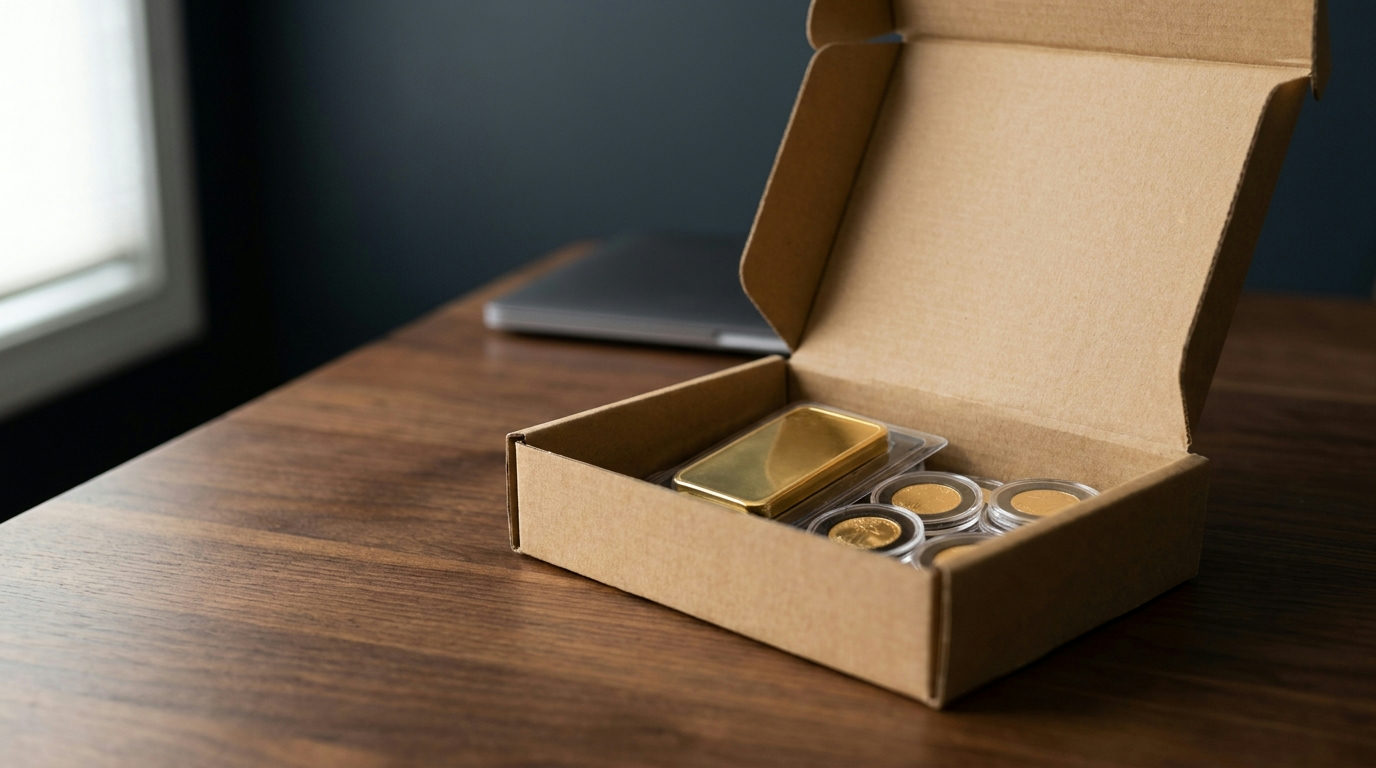
Buying gold and silver online is convenient. You can compare many products in minutes, see published prices, and have metal delivered to your door. It also brings risks that do not exist when you walk into a shop: fake websites, payment fraud, lost parcels, and counterfeit products sold by strangers. This guide to buying gold online safely covers each stage of the process, from checking the website to opening the box, so you can enjoy the convenience without the avoidable risks.
This article is general education. It is not financial advice. Silver Gold Today may earn a commission from some links on the site; see our affiliate disclaimer.
Before you buy: check the website itself
Criminals sometimes build convincing copies of real dealer websites, or create entirely fake shops that look professional. A few checks take only minutes.
- Type the address yourself. Rather than clicking links in emails, texts, or ads, type the dealer’s web address directly or use a bookmark you saved earlier.
- Check the spelling of the domain. Fake sites often use addresses that differ from the real one by a single letter, an extra word, or a different ending.
- Look for real contact details. A legitimate business lists a physical address and a phone number you can call. Try calling before a large first order.
- Search for the business name plus “scam” or “complaints.” It is a quick way to surface warnings other buyers have posted.
- Be wary of brand-new sites. A shop with no history, no independent reviews, and prices well below everyone else deserves serious caution.
Our guide on how to choose a bullion dealer goes deeper into checking a dealer’s track record. For general advice on recognizing online shopping scams, FTC Consumer Advice is a good starting point.
Compare the real cost
Online listings make it easy to compare, but only if you compare the right numbers. Look at the total delivered cost per troy ounce of pure metal, not just the product price.
- Check the live spot price on a source such as Kitco at the moment you compare.
- Work out each product’s premium over spot. Our spot price vs premium guide explains the method.
- Add shipping, insurance, and any payment surcharges shown at checkout.
- Check whether sales tax applies to your order where you live.
- Compare totals across at least two or three dealers.
If one dealer is dramatically cheaper than all the others, treat that as a warning sign rather than a bargain.
Choosing a safe payment method
How you pay affects both your cost and your protection if something goes wrong. Dealers often price payment methods differently, so check the options at checkout.
- Bank wire or bank transfer. Often the lowest price at many dealers, but once sent, money can be very hard to recover. Use it only with dealers you have verified carefully.
- Checks or money orders. Sometimes discounted too, but slower, since many dealers wait for payment to clear before shipping.
- Credit or debit cards. Usually more expensive because of card fees, but may offer dispute options through your card issuer. Check your issuer’s terms.
- Unusual methods. Be very cautious of any seller who asks for gift cards, payment to a personal account, or only cryptocurrency. These are common features of scams.
Never send payment details by email, and never pay in response to an unexpected message claiming your order needs “verification.”
Understand the order process
Bullion orders work differently from most online shopping, so read the dealer’s terms before you click “buy.”
- Price lock. Many dealers lock your price when you place the order. That protects you if prices rise, but it also means you are committed if prices fall.
- Cancellation. Cancelling a locked order may carry a fee, especially if the market has moved. Read the cancellation terms first.
- Payment deadline. If you pay by wire or check, there is usually a deadline. Missing it can cancel the order or trigger fees.
- Shipping timing. Some products ship immediately; others are pre-sale items that ship later. Check the expected ship date before you pay.
Shipping and delivery
Precious metals are valuable and compact, which makes them attractive to thieves. Reputable dealers take shipping security seriously.
- Insurance. Confirm your order is fully insured until it is delivered, and find out who to contact if it goes missing.
- Discreet packaging. Good dealers use plain boxes with no mention of gold, silver, or the dealer’s name on the outside.
- Signature on delivery. Many dealers require a signature for larger orders. Plan to be home, or arrange collection from a carrier location.
- Tracking. Watch the tracking number and act quickly if a parcel stalls or shows as delivered when it has not arrived.
- Delivery address. Think carefully before shipping to a workplace or a shared mailroom where packages may sit unattended.
Buying gold online safely starts again when the parcel arrives
Opening the box is part of the process, too. A few habits protect you if there is a problem.
- Inspect the outer packaging before signing or opening. Note any damage, tampering, or resealing.
- Record the unboxing. A short video of opening the parcel and showing the contents can help if you later need to make a claim.
- Check the packing slip against your order: product, quantity, and condition.
- Weigh and measure each item against its published specifications. Our guide to spotting fake gold and silver coins explains the basic checks.
- Report problems quickly. Most dealers set a short window for reporting missing or damaged items.
Marketplaces and private sellers
General online marketplaces and social media groups also sell gold and silver. Some sellers are honest, but the risks are higher than with established dealers, because sellers are harder to verify and counterfeit products are a bigger concern. If you buy this way, check seller history carefully, prefer payment methods with buyer protection, and test everything you receive. For a first purchase, an established dealer is usually the safer choice.
Protect your information
- Use a strong, unique password for each dealer account, and turn on two-factor sign-in if offered.
- Be careful about sharing your purchases on social media, which can make you a target.
- Delete old order emails you no longer need, or store them securely.
- Be suspicious of unexpected calls or emails that mention your order, even if they seem to come from the dealer. Contact the dealer directly using details you already have.
Frequently asked questions
Is it safe to buy gold online?
It can be, if you buy from an established, verified dealer, pay with a sensible method, and check what you receive. Most problems come from fake sites, private sellers, and deals that look too good to be true.
Why is bank wire cheaper than card payment?
Card payments carry processing fees and the possibility of chargebacks, so many dealers price them higher. Wires are cheaper for the dealer but offer you less protection.
What if my parcel is lost?
Contact the dealer immediately. If the order was insured, the dealer or carrier should handle the claim. Keep all tracking information and correspondence.
Should I keep the original packaging?
Yes, especially for bars in sealed assay packaging. Original packaging can help with resale.
The bottom line
Buying gold online safely is mostly about habits. Verify the website, compare total delivered cost, choose your payment method with care, read the order terms, insist on insured and discreet shipping, and inspect everything on arrival. Treat prices far below the market, pressure tactics, and unusual payment requests as reasons to stop. With those checks in place, online buying can be both convenient and secure.