
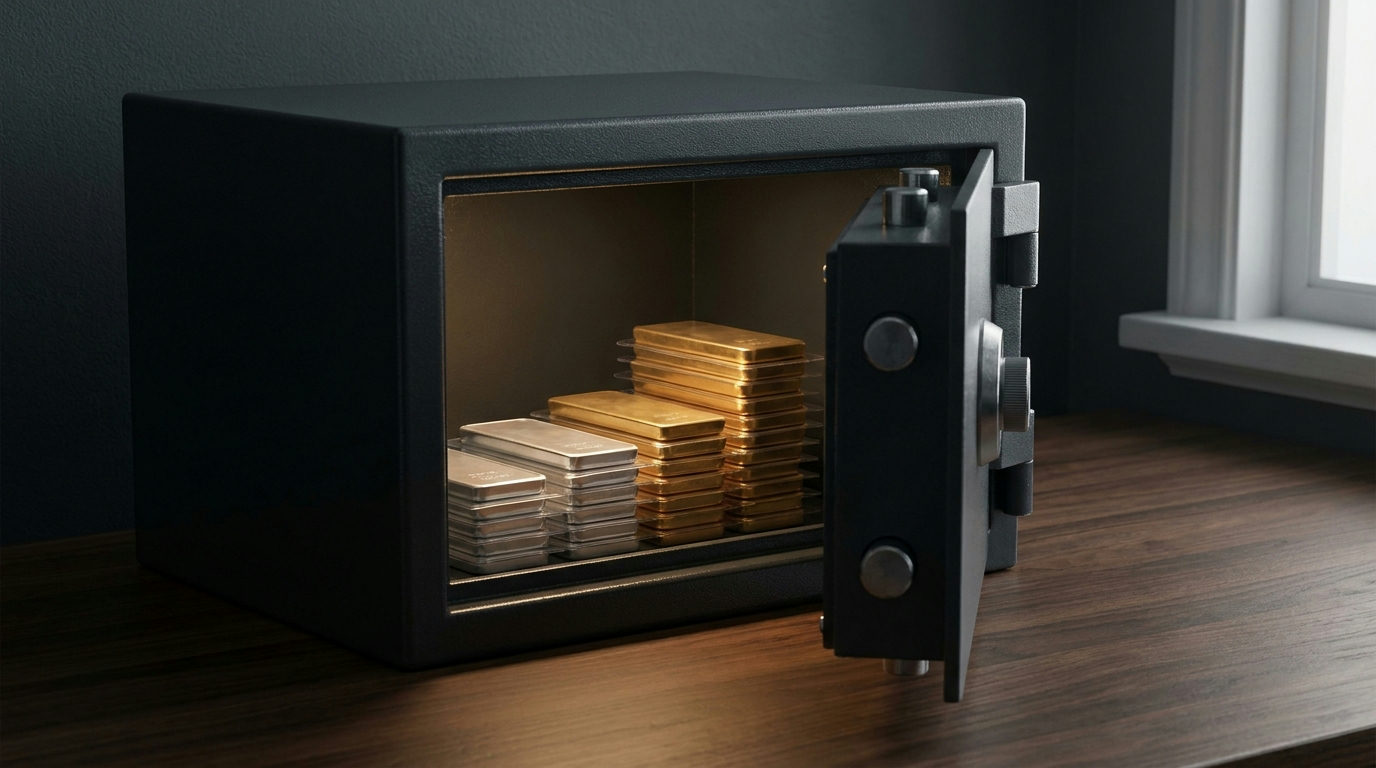
Buying physical metal is only half the decision. The other half is where it lives. Learning how to store gold and silver well means balancing three things that pull against each other: security, access, and cost. No option wins on all three. This guide compares the main choices, the questions to ask about each, and the habits that protect you whichever you pick.
This article is general education, not financial advice. Silver Gold Today may earn a commission from some links on the site; see our affiliate disclaimer.
Start with three questions
Before you compare options, answer these honestly:
- How quickly might you need the metal? If you want it within minutes, storage far from home will frustrate you. If you are holding for years, access matters less.
- How much are you storing? A few coins and a large holding have very different risks. Silver also takes far more space than gold for the same value.
- Who else needs to know? If something happens to you, can a trusted person find and reach the metal? Many people forget this one.
Option 1: Storing gold and silver at home
Home storage gives you full control and instant access. It also puts all of the responsibility on you.
What works
- A proper safe. Choose one that is heavy or bolted to the floor or a wall. A small, light safe can simply be carried away. Look for independent fire and burglary ratings and read what each rating actually covers.
- Discretion. The best home storage is the one nobody knows about. Avoid discussing holdings, and be careful with packaging left in the recycling bin after a delivery.
- Protective packaging. Keep coins in their capsules or tubes, and keep bars in their original assay packaging where they have it. This protects the surface and makes resale easier.
What to check
Home insurance policies often limit coverage for coins and bullion unless you add specific cover. Call your insurer, ask exactly how they treat precious metals, and get the answer in writing. A policy rider or separate valuables policy may be needed for larger holdings.
Option 2: A bank safe deposit box
A safe deposit box moves the metal out of your home and into a bank vault. Theft risk usually drops, but there are trade-offs that surprise many people.
- The contents are not covered by deposit insurance. Federal deposit insurance protects deposit accounts, not storage space. Banks state this plainly in their own box agreements, as in this Wells Fargo safe deposit summary and M&T Bank’s safe deposit FAQ. If you want the contents insured, you need to arrange that cover yourself.
- Access follows bank hours. You can only reach the box when the branch is open, which rules it out if you want metal on short notice.
- Access after death can be slow. Depending on how the box is held and where you live, family members may need legal steps to open it. AARP’s guide to safe deposit boxes covers this and other lesser-known drawbacks.
- Availability varies. Some branches offer fewer boxes than they used to, so ask before you plan around one.
Read the box agreement before you sign it. It tells you what the bank is and is not responsible for.
Option 3: A private depository or vault service
Specialist depositories store precious metals for many customers, usually with professional security, audits, and insurance included in the fee. Many bullion dealers partner with one or offer their own vaulting.
Allocated vs unallocated storage
This is the most important distinction to understand before you sign up:
- Allocated (or segregated) storage means specific bars or coins are held in your name. They are legally yours, and they should be listed by serial number or description in your account.
- Unallocated storage means you hold a claim on a quantity of metal within a larger pool. It is usually cheaper, but you are a creditor of the provider rather than the owner of specific metal. If the provider fails, your position may be very different.
Questions to ask any depository
- Is my metal allocated, segregated, or pooled? Can I see it listed by item?
- Who insures the holdings, for what risks, and up to what limit? Can I see the insurance certificate?
- How often is the vault audited, and by whom? Are audit results published?
- What are the annual fees, and are there fees to add, withdraw, or ship metal?
- How long does it take to take delivery or sell, and how does that work?
- Where is the vault, and which country’s law governs my ownership?
Comparing ways to store gold and silver
When you weigh up how to store gold and silver, it helps to set the options side by side:
- Home: fastest access and no ongoing fee, but the highest personal theft risk and insurance gaps unless you arrange cover.
- Bank box: lower theft risk and modest cost, but contents are not deposit-insured and access is limited to bank hours.
- Depository: professional security with insurance often included, but annual fees, slower access, and the need to check the provider carefully.
Many owners split their holdings, keeping a small amount at home and the rest in a vault or bank. Splitting reduces the damage from any single failure.
Habits that protect you anywhere
- Keep an inventory. List each item, its description, weight, and where it is. Store the list somewhere other than with the metal.
- Keep receipts. Purchase records help with insurance claims and with working out any gain when you sell.
- Tell someone you trust. Make sure an executor or family member knows what you own and how to reach it.
- Handle less. Every time you handle coins, you risk scratches and fingerprints. Leave them in protective packaging.
- Review once a year. Check insurance limits, fees, and your inventory as your holdings change.
If you are still deciding what to buy, our guides to spot price vs premium and bullion vs numismatic coins cover the buying side.
Frequently asked questions
What should I check before storing a large amount at home?
Check your insurance in writing, the rating of your safe, and any local reporting or tax rules. If the amount is significant, a qualified professional can help you weigh the options.
Does silver need different storage than gold?
Silver tarnishes more easily and takes far more space for the same value. Airtight capsules and a dry environment help. Gold is compact and does not tarnish in normal conditions.
Should I store metal outside my home country?
Some investors do, for diversification. It adds legal, tax, and reporting questions, so speak with a qualified professional before you choose an overseas vault.
The bottom line
There is no single right answer to how to store gold and silver. Home storage maximizes control; a bank box adds physical security but not deposit insurance; a depository adds professional protection at an annual cost. Decide how fast you need access, check insurance in writing, keep an inventory, and make sure someone you trust can find your metal. If storage choices affect your wider estate or tax planning, talk with a qualified professional.